
Tongue and lip ties don’t just affect babies, they can continue to impact children’s speech, eating, and facial growth as they develop. These restrictive bands of tissue limit the natural movement of the tongue or upper lip, which can influence jaw alignment, airway health, and even posture.
At Integrative Dental of Denver, Dr. Jim Bieneman provides gentle, comprehensive care for children with tongue and lip ties. His approach focuses on proper function, breathing, and long-term development—so your child can speak, eat, and rest comfortably as they grow.
A restricted tongue can prevent a child from achieving proper oral rest posture where the tongue rests on the roof of the mouth and the lips stay closed. Without this posture, facial growth may narrow, teeth can crowd, and the airway may become more constricted.
Early diagnosis and treatment support natural jaw expansion, balanced facial development, and healthy nasal breathing. Learn how this ties into your child’s overall growth on our Airway Orthodontics page.
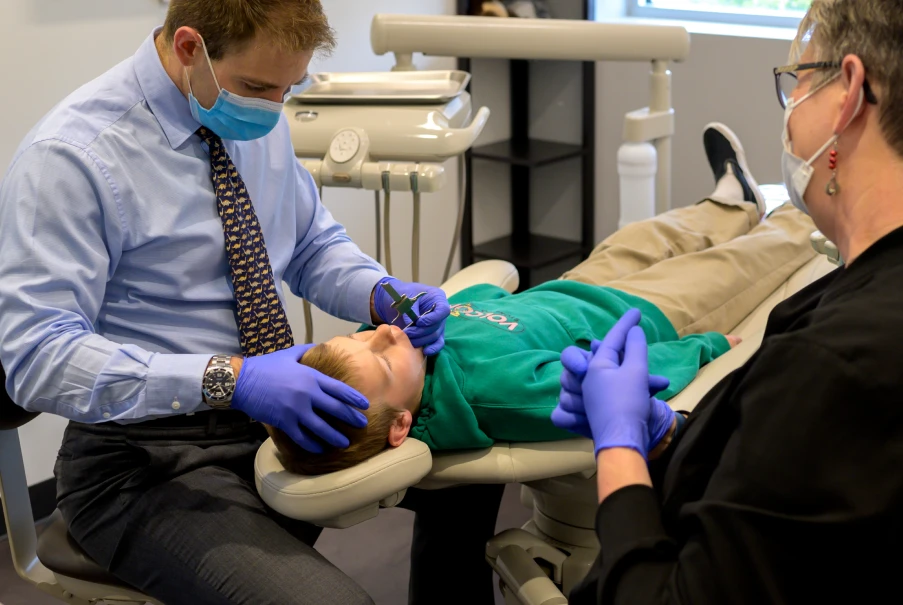

As children grow, the signs of a tongue or lip tie can appear in different ways. Parents may notice:
Speech delays or difficulty forming certain sounds
Picky eating or limited food textures
Crowded front teeth or open bite
Mouth breathing or snoring during sleep
Poor posture, neck tension, or frequent headaches
Trouble keeping lips closed or cleaning food from teeth
If you recognize these patterns, an evaluation can help determine whether a tongue or lip tie is contributing to the issue.
Dr. Bieneman’s treatment philosophy goes beyond releasing the tissue. His goal is to restore function, not just movement. By evaluating your child’s breathing, swallowing, and posture, he ensures the procedure supports full-body balance and long-term wellness.
This integrative, airway-focused care helps children not only overcome their immediate symptoms but also thrive as they continue to grow.
Dr. Bieneman uses advanced laser technology to perform quick, comfortable tongue and lip tie releases. This minimally invasive method allows for faster healing and minimal bleeding—ideal for younger patients.
Each child receives a personalized evaluation to determine whether treatment is needed and how it fits within their overall care plan. Many children experience immediate improvement in speech clarity, feeding comfort, and breathing.
After treatment, myofunctional therapy helps children retrain the tongue and facial muscles for correct swallowing, speech, and nasal breathing. These gentle exercises support long-term stability, prevent relapse, and promote better airway function. By addressing the muscle coordination behind oral function, myofunctional therapy reinforces the benefits of the release and supports healthy growth.
Explore our video library featuring Dr. Jim Bieneman as he explains the causes, symptoms, and treatment of tongue and lip ties at every age. Recommended videos for parents include:











At what age can my child be treated for a tongue or lip tie?
Children can be safely evaluated and treated at nearly any age. The best timing depends on symptoms, growth patterns, and the presence of speech or airway issues.
Will my child need myofunctional therapy?
Yes, in most cases. Therapy helps retrain muscle coordination, improves tongue posture, and supports lasting results after the release.
How do tongue and lip ties affect speech?
Restricted movement can make it hard for children to pronounce certain sounds, leading to speech delays or unclear articulation.
Is laser treatment safe for kids?
Absolutely. Laser technology allows for a precise, gentle release with minimal discomfort and quick healing—making it ideal for pediatric patients.
Can untreated tongue ties affect long-term growth?
Yes. A tongue tie can contribute to narrow palate development, crowded teeth, and airway constriction over time if left unaddressed.