
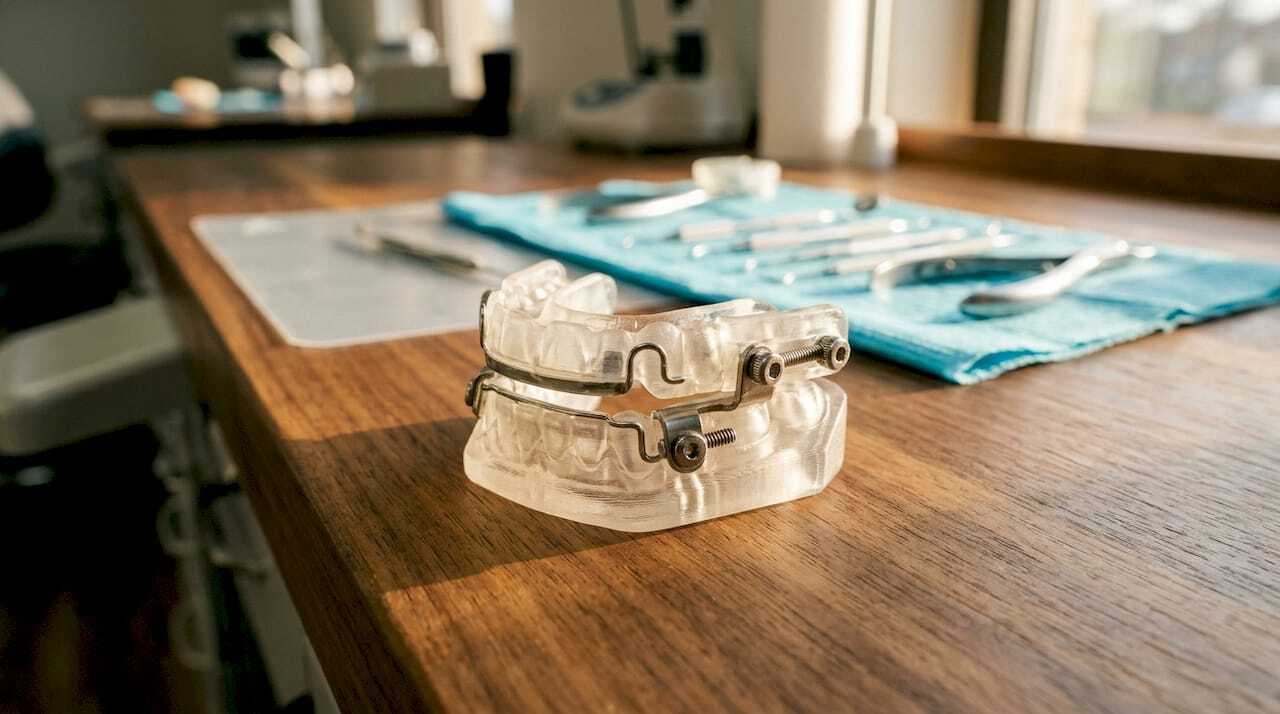
A mandibular advancement device (MAD) is an effective, evidence-backed treatment option for adults with mild to moderate obstructive sleep apnea (OSA) and for patients who cannot tolerate CPAP therapy. The European Respiratory Journal Task Force confirms that MADs reduce both apnea-hypopnea index (AHI) scores and daytime sleepiness in this population, and DoD/VA clinical guidance formally recommends them as first-line therapy for mild or moderate OSA.
Here is what the evidence shows at a glance:
- AHI reduction: Systematic reviews report consistent within-group AHI reductions with MAD therapy in mild to moderate OSA, though the magnitude varies across patients and device types.
- Symptom improvement: Daytime sleepiness (measured by the Epworth Sleepiness Scale) improves meaningfully in most patients, often comparably to CPAP despite smaller raw AHI reductions.
- Adherence advantage: Many patients wear a MAD more hours per night than they use CPAP, which can offset the device’s lower per-hour efficacy and produce similar real-world outcomes.
- Who should ask about a MAD now: Adults with mild to moderate OSA, anyone who has tried and abandoned CPAP, and patients whose primary complaint is snoring without confirmed severe apnea.
If you fall into any of these categories, the right next step is a conversation with a sleep physician and an airway-focused dentist, ideally working together.
Key Takeaways
A mandibular advancement device is a clinically validated, first-line treatment option for mild to moderate obstructive sleep apnea, with adherence advantages over CPAP that often translate into comparable real-world outcomes.
| Point | Details |
|---|---|
| Who benefits most | Adults with mild to moderate OSA and CPAP-intolerant patients at any severity level with monitoring. |
| Custom beats prefabricated | A meta-analysis of 22 studies found custom-made MADs showed marginally greater AHI reduction and higher adherence than ready-made devices. |
| Titration is non-optional | Starting at ~50% of maximum protrusion and adjusting incrementally is the evidence-based standard; skipping follow-up sleep testing leaves AHI control unconfirmed. |
| Long-term dental monitoring | Bite changes can develop over months to years; occlusal assessments every 6–12 months catch shifts before they become clinically significant. |
| Integrativedentalofdenver | Offers digital-scan custom MAD fitting, in-office titration, sleep-physician coordination, and bruxism-compatible device selection in Denver. |
Table of Contents
- How a mandibular advancement device opens and stabilizes your airway
- What types of mandibular advancement devices are available?
- Who is a good candidate, and who should avoid MAD therapy?
- What the research says about mandibular advancement device effectiveness
- Common side effects, TMJ risks, and how to protect your bite
- How mandibular titration works and what follow-up looks like
- How to get a MAD in the U.S.: costs, insurance, and the clinical pathway
- Questions to bring to your dentist or sleep clinic
- How Integrativedentalofdenver integrates MAD therapy into airway-centered care
- Device care, expected lifespan, and when to replace your MAD
- What clinicians see in practice: a perspective on realistic expectations
- Integrativedentalofdenver offers personalized MAD evaluation and fitting in Denver
- Sources
How a mandibular advancement device opens and stabilizes your airway
The core mechanism is straightforward: a MAD holds the lower jaw (mandible) in a forward position during sleep, which pulls the tongue base away from the back of the throat and enlarges the oropharyngeal space. That physical widening reduces the tendency of soft tissues to collapse inward with each breath, which is the defining event in obstructive sleep apnea.
Several physiologic changes happen simultaneously:
- Tongue base anteriorization: Moving the mandible forward carries the genioglossus muscle with it, repositioning the tongue away from the posterior pharyngeal wall.
- Lateral pharyngeal widening: Forward jaw positioning also stretches the lateral walls of the pharynx, increasing cross-sectional airway area from multiple directions, not just front-to-back.
- Increased muscle tone: The mechanical stretch on pharyngeal dilator muscles appears to increase their baseline tone, reducing passive collapsibility during the relaxed state of sleep.
- Vertical opening effect: Many devices also increase the distance between upper and lower teeth slightly, which adds a secondary airway-opening effect through jaw rotation.
Critically, the degree of advancement matters. Research published in Thorax confirms a dose-dependent relationship: larger mandibular protrusion generally improves oxygenation and reduces pharyngeal collapsibility, but it also raises the risk of jaw soreness and bite changes. This is precisely why gradual, monitored titration is the standard of care rather than setting the device at maximum protrusion from night one.
AASM research notes that advances in digital scanning and 3D-printed materials have improved how precisely devices can be fabricated to a patient’s anatomy, which translates directly into better comfort and potentially better nightly adherence.
What types of mandibular advancement devices are available?
Understanding the device landscape helps you ask better questions at your consult. The most clinically meaningful distinctions are adjustability, fabrication method, and mechanical design.
Titratable vs. fixed
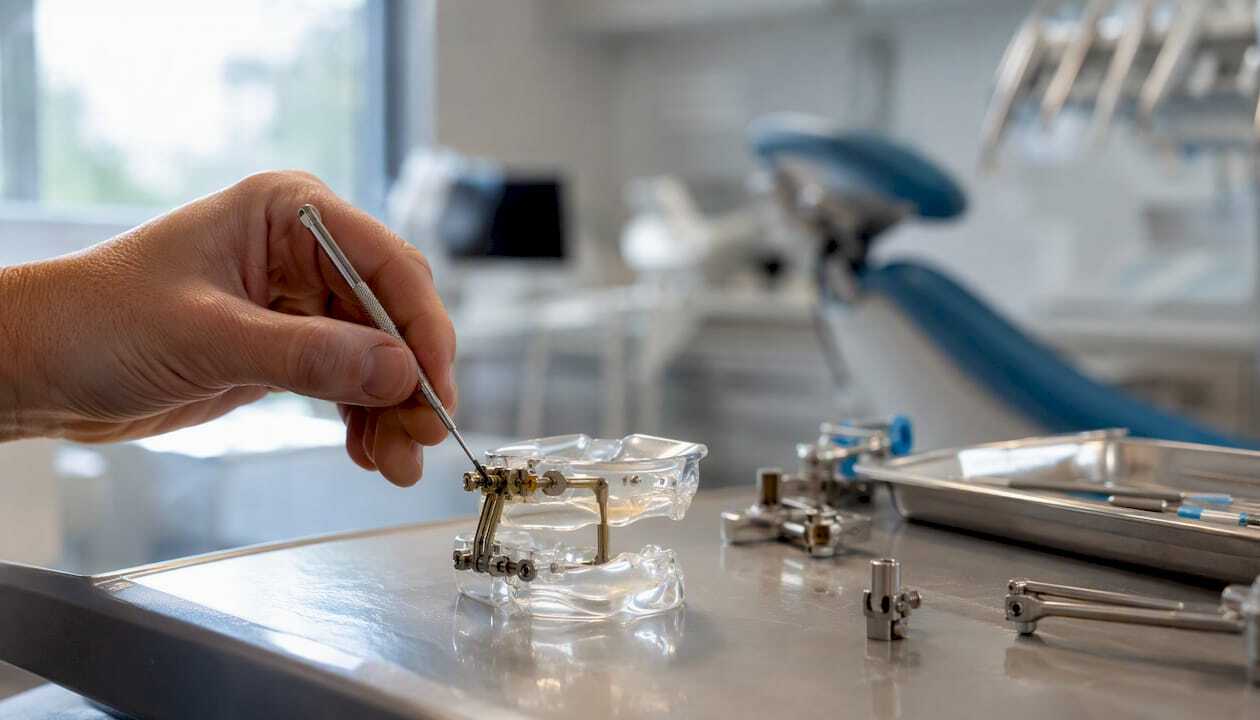
Titratable devices allow incremental forward adjustment after fitting, typically in 0.25–1 mm steps using a screw mechanism or interchangeable connectors. Fixed (monoblock) devices are set at a single protrusion position. A meta-analysis of 22 studies found that both titratable and nontitratable MADs reduce AHI, but titratable designs give clinicians the flexibility to optimize the device to the patient’s response rather than guessing at the correct position upfront.
Custom-made vs. prefabricated
Custom devices are fabricated from a dental impression or digital scan of your specific dentition. Prefabricated (ready-made) devices use a generic or semi-adjustable fit. The same meta-analysis found that custom-made MADs showed marginally greater AHI reduction and higher adherence compared with ready-made devices. Custom fabrication also distributes retention forces more evenly across teeth, reducing the risk of localized dental stress.
Common mechanical styles
- EMA-style (Elastic Mandibular Advancement): Uses interchangeable elastic straps of varying lengths and stiffnesses to control protrusion; allows some lateral jaw movement, which many patients find more comfortable for sleeping.
- Herbst-style (telescopic/rigid connector): Uses rigid metal rods connecting upper and lower trays; highly adjustable and durable, often preferred for patients with significant bruxism because the mechanism is less likely to fatigue.
- Panthera (Panthera Dental): A representative example of a digitally designed, 3D-printed custom MAD fabricated from thin nylon; notable for its small material footprint and comfort profile, particularly for patients with a sensitive gag reflex.
- General titratable custom devices: Many labs produce custom titratable appliances using acrylic or thermoplastic materials with screw-based advancement; these remain the most widely prescribed category in U.S. sleep dental practices.
Pros and cons at a glance
- Titratable: More flexible optimization, higher upfront cost, slightly more complex mechanism.
- Fixed/monoblock: Lower cost, simpler to use, no mid-treatment adjustment if symptoms change.
- Custom-made: Better fit, higher adherence, greater cost ($1,000–$3,000+ depending on design and lab).
- Prefabricated: Lower cost, available quickly, less precise fit, generally lower long-term adherence.
Pro Tip: Ask your dentist whether the device they recommend is titratable before fabrication begins. Switching from a fixed to a titratable design after the fact means starting over with a new device.
Who is a good candidate, and who should avoid MAD therapy?
Most adults with mild to moderate OSA are reasonable candidates for a mandibular advancement device. So are patients with moderate to severe OSA who have tried CPAP and cannot tolerate it, provided they are monitored with objective follow-up sleep testing to confirm the device is controlling their apnea adequately.
Best candidates:
- Adults with an AHI of 5–30 events per hour (mild to moderate OSA)
- Patients with primary snoring without confirmed OSA
- CPAP-intolerant patients at any OSA severity level, with appropriate monitoring
- Adults with positional OSA (worse when supine) who may respond particularly well to combined positional and MAD therapy
Absolute contraindications:
- Edentulous patients (no natural teeth to anchor the device)
- Severe untreated periodontal disease or inadequate remaining dentition
- Active, severe, uncontrolled temporomandibular joint (TMJ) pain that limits daily jaw function
- Inability to protrude the mandible at least 5–6 mm (insufficient range for therapeutic advancement)
Relative cautions requiring careful assessment:
- Significant bruxism (grinding can fatigue device mechanisms and accelerate wear; specific designs mitigate this)
- Severe gag reflex (may require a device with a smaller material footprint, such as a thin 3D-printed design)
- Limited manual dexterity (some titratable mechanisms require fine adjustments the patient performs at home)
- Central sleep apnea or complex sleep apnea (MADs address obstruction, not central events)
Clinical guidance from the VA/DoD and published clinical considerations both emphasize that inadequate teeth for anchoring, severe dental disease, and manual-dexterity limits are among the most common practical exclusions practitioners identify.
What the research says about mandibular advancement device effectiveness
MADs consistently reduce AHI and improve daytime sleepiness in mild to moderate OSA. A recent systematic review reported consistent within-group AHI reductions and symptom improvement across studies, while noting heterogeneity and generally low-to-moderate certainty across the evidence base. That honest caveat matters: individual responses vary considerably, and no single AHI reduction figure applies to every patient.
The CPAP comparison is where the nuance lives. CPAP typically produces larger raw AHI reductions, particularly in severe OSA. But the ERJ Task Force found that symptom and quality-of-life outcomes can be similar between the two treatments, largely because patients tend to wear MADs more consistently each night. A device that reduces AHI by a smaller amount but is used every night often outperforms a more effective device that sits on the nightstand.
| Outcome | MAD | CPAP |
|---|---|---|
| AHI reduction | Consistent but variable; generally smaller than CPAP | Larger raw reduction, particularly in severe OSA |
| Daytime sleepiness (ESS) | Meaningful improvement in mild–moderate OSA | Comparable improvement when used consistently |
| Quality of life | Similar to CPAP in many trials | Similar to MAD in many trials |
| Nightly adherence | Generally higher patient preference and use | Lower adherence in a significant proportion of patients |
| Customization | Titratable designs allow incremental optimization | Pressure titration via auto-CPAP or in-lab study |
| Best fit | Mild–moderate OSA; CPAP-intolerant patients | Moderate–severe OSA; patients who tolerate the mask |
Custom-made MADs also showed marginally greater AHI reduction and higher adherence than ready-made devices across the 22-study meta-analysis, reinforcing the clinical preference for custom fabrication when resources allow.
Common side effects, TMJ risks, and how to protect your bite
Most patients experience some short-term discomfort when they begin MAD therapy. Tooth and jaw soreness, increased salivation, and mild gum irritation are the most common complaints, and they typically resolve within the first two to four weeks as the jaw adapts to the new resting position.
Short-term side effects (usually transient):
- Morning jaw or tooth soreness
- Excessive salivation or, conversely, dry mouth
- Gum irritation at device contact points
- Mild TMJ discomfort, particularly in the first weeks of use
Longer-term dental and skeletal changes:
Sustained forward positioning of the mandible can, over months to years, produce measurable changes in tooth position and bite relationship. The lower front teeth may tip slightly forward; the upper front teeth may tip slightly back; and the overall bite relationship can shift. A review of complications associated with oral appliances confirms that while short-term effects are usually mild and transient, longer-term dental and skeletal changes can occur, underscoring the need for regular dental monitoring.
Risk-mitigation strategies:
- Gradual titration: Starting at a conservative protrusion level and advancing slowly reduces the mechanical load on teeth and joints.
- Morning occlusal guide: A short morning repositioning exercise (biting into a soft repositioner for 5–10 minutes after removing the device) helps the jaw return to its natural position and reduces residual soreness.
- Regular dental follow-up: Occlusal assessments every 6–12 months allow early detection of bite changes before they become clinically significant.
- Bruxism-compatible designs: Patients who grind their teeth should discuss Herbst-style or reinforced mechanisms with their dentist, as these distribute grinding forces more evenly and resist fatigue.
Return to the clinic promptly if you notice: persistent TMJ pain lasting more than a few weeks, a sudden change in how your teeth meet in the morning, new or worsening jaw clicking, or a noticeable increase in snoring after a period of improvement.
Pro Tip: During the first 6–12 months, take a photo of your bite (upper and lower teeth touching) every three months. This gives your dentist a simple visual baseline to compare against at follow-up appointments, catching subtle shifts before they require intervention.
How mandibular titration works and what follow-up looks like
Titration is the process of incrementally advancing the device until symptoms resolve and objective testing confirms adequate AHI control. The ERJ Task Force recommends starting around 50% of the patient’s maximum comfortable protrusion, then adjusting based on symptom response and sleep-test results.
Common titration methods:
- Clinical symptom tracking: Patient-reported snoring, witnessed apneas, and daytime sleepiness guide early adjustments.
- Home sleep apnea testing (HSAT) with device in place: The most practical way to confirm objective AHI control without an in-lab study; typically performed at 6–12 weeks after fitting.
- In-lab polysomnography (PSG) with device: Used when HSAT results are ambiguous or when the patient has complex sleep architecture.
- Oximetry: Overnight pulse oximetry can screen for residual oxygen desaturation between formal sleep studies.
- Adherence sensors: Intraoral sensors such as Dentitrac provide objective nightly-use data. AASM research notes these tools offer valuable adherence data but are not yet standard practice due to cost and coverage limitations.
Typical follow-up schedule:
- 24–48 hours after fitting: Phone or portal check-in to address immediate comfort issues and confirm the patient can insert and remove the device independently.
- 2–6 weeks: In-office appointment to assess fit, comfort, and initial symptom response; first titration adjustment if needed.
- 3–6 months: Objective efficacy testing (HSAT or PSG with device in place) to confirm AHI control; further titration if targets are not met.
- Annually: Dental assessment for bite changes, device wear, and re-evaluation of OSA severity; re-titration if snoring or symptoms return.
What triggers re-titration? A return of snoring, new reports of witnessed apneas, worsening daytime sleepiness, or a follow-up sleep study showing inadequate AHI control all indicate the device needs further advancement or reassessment.
How to get a MAD in the U.S.: costs, insurance, and the clinical pathway
The pathway from suspicion of OSA to a fitted, titrated device involves several coordinated steps. Skipping any of them, particularly the objective sleep study, leaves both patient and clinician without the data needed to confirm the device is actually working.
The clinical pathway:
- Step 1: Diagnostic sleep study. A home sleep apnea test or in-lab polysomnography establishes the diagnosis and AHI severity. A prescription from a sleep physician is required before a dentist can legally fit a MAD for OSA in the U.S.
- Step 2: Sleep physician and dental collaboration. The sleep physician confirms MAD is appropriate; the airway-focused dentist evaluates dental suitability (tooth anchorage, TMJ health, jaw range of motion).
- Step 3: Digital scan or dental impression. A precise record of the patient’s dentition is sent to a dental lab for custom fabrication, or processed in-office with 3D printing technology.
- Step 4: Device fitting and initial titration. The device is fitted, the starting protrusion is set, and the patient receives instructions for insertion, removal, and morning repositioning.
- Step 5: Follow-up titration and efficacy testing. Objective sleep testing with the device in place confirms AHI control; adjustments continue until targets are met.
Typical U.S. cost ranges:
Custom titratable MADs typically range from lower to higher costs depending on device design, lab fees, and the number of follow-up visits included. Prefabricated devices cost significantly less but carry the fit and adherence limitations described above. Devices with embedded adherence sensors add further cost.
Insurance coverage:
MADs for diagnosed OSA are generally covered under medical insurance (not dental insurance) when medical necessity is documented. Insurers typically require a sleep study confirming OSA, a physician’s prescription, and documentation that CPAP was tried and failed or is medically contraindicated. Medicare covers oral appliance therapy for OSA under its durable medical equipment benefit when these criteria are met.
Pro Tip: Before your fitting appointment, ask the dental office to verify your medical insurance benefits for oral appliance therapy under DME codes E0486 (custom) or E0485 (prefabricated). Submitting a prior authorization request with the sleep study report and physician letter of medical necessity significantly increases the likelihood of coverage approval.
Questions to bring to your dentist or sleep clinic
Walking into a MAD consultation with specific questions shifts the conversation from passive to informed. Here is a practical checklist organized by priority.
Device selection questions:
- Is this device custom-made from a scan or impression of my teeth, or is it prefabricated?
- Is it titratable, and how are adjustments made (patient-controlled vs. in-office)?
- What material is the device made from, and how does that affect durability if I grind my teeth?
- What is the warranty, and what does repair or replacement cost if the device breaks?
Clinical priority questions:
- Based on my AHI and dental health, which device design do you recommend, and why?
- Do I have enough healthy teeth to anchor the device safely?
- Is my TMJ healthy enough for MAD therapy, or do I need a TMJ evaluation first?
- Do I have significant bruxism that would affect device selection or lifespan?
- Does my gag reflex require a device with a smaller material footprint?
Follow-up and monitoring questions:
- What is the plan for confirming the device is controlling my AHI (HSAT or in-lab PSG)?
- How many titration visits are included, and what triggers a re-titration?
- Do you offer objective adherence tracking, and is that cost covered or billed separately?
- How often will you check my bite for changes, and what happens if my bite shifts?
- Who do I contact if I have urgent comfort issues between scheduled appointments?
How Integrativedentalofdenver integrates MAD therapy into airway-centered care
At Integrativedentalofdenver, MAD therapy is not a standalone procedure. It is one component of a coordinated, airway-first treatment plan that begins with a thorough diagnostic workup and continues through long-term monitoring.
The clinic workflow:
- Diagnosis and shared planning: The process starts with a review of the patient’s sleep study results and collaboration with the referring or co-managing sleep physician to confirm MAD appropriateness and set AHI targets.
- Digital scanning and 3D-assisted fabrication: Integrativedentalofdenver uses in-office digital scanning technology to capture precise dental anatomy, eliminating the discomfort of traditional impressions and enabling faster, more accurate device fabrication.
- Custom device fitting and in-office titration: Devices are fitted and titrated in-office, with protrusion set conservatively and advanced incrementally based on symptom response and objective testing.
- Objective and subjective efficacy testing: Follow-up sleep testing with the device in place confirms AHI control. Patient-reported outcomes (daytime sleepiness, snoring, sleep quality) are tracked alongside objective data.
- Annual monitoring for dental and occlusal changes: Regular bite assessments protect against long-term dental changes and catch device wear before it compromises fit or efficacy.
Why an airway-first, multidisciplinary approach matters:
Fitting a device without coordinating with a sleep physician means there is no one monitoring whether the device is actually controlling the patient’s apnea. Fitting a device without assessing TMJ health and occlusal baseline means there is no way to detect bite changes early. Integrativedentalofdenver’s airway-focused treatment principles address both gaps by integrating dental and sleep-medicine expertise from the first appointment.
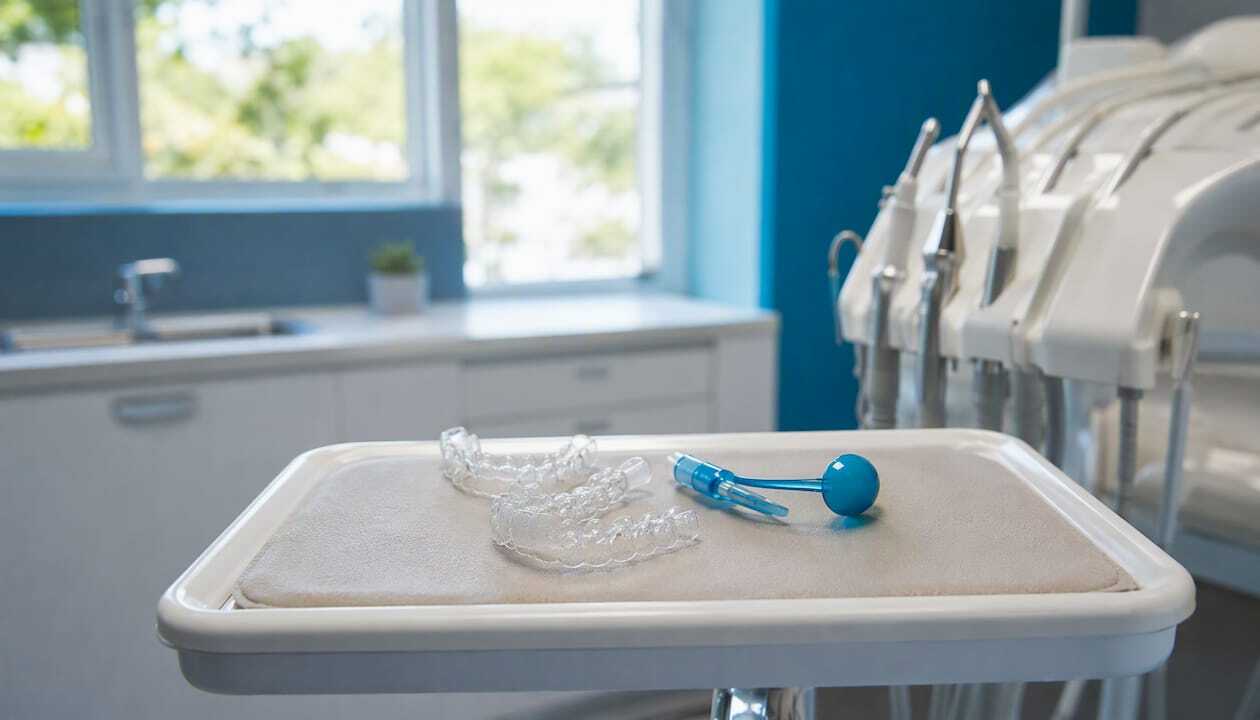
The practice also offers adjunctive services that complement MAD therapy, including myofunctional therapy, TMJ/TMD management, and palate expansion for patients whose airway anatomy benefits from structural support alongside mandibular repositioning. Patients with concurrent bruxism can access specialized clenching and grinding care that informs device material and design selection.
Pro Tip: Ask any airway dental practice whether they communicate directly with your sleep physician after your efficacy sleep study. That closed-loop communication is what separates a well-managed MAD program from a device fitting with no follow-through.
Device care, expected lifespan, and when to replace your MAD
A well-maintained MAD typically lasts 2–4 years, though patients with significant bruxism often need replacement sooner. Daily cleaning and proper storage are the two most controllable factors in extending device life and maintaining hygiene.
Daily cleaning routine:
- Remove the device each morning and rinse immediately under cool water (never hot, which can warp thermoplastic materials).
- Brush gently with a soft toothbrush and non-abrasive soap or a denture cleaner formulated for oral appliances; avoid regular toothpaste, which is abrasive enough to scratch device surfaces and create bacterial harboring sites.
- Allow the device to air-dry completely before storing in its ventilated case.
- Soak in a diluted denture-cleaning tablet solution (such as Efferdent or Retainer Brite) two to three times per week to reduce bacterial and biofilm buildup.
Storage and handling:
- Store in the provided hard case away from heat sources and direct sunlight.
- Keep out of reach of pets; dogs are particularly attracted to the scent of oral appliances.
- Never wrap the device in a tissue or napkin, which is the most common cause of accidental disposal.
Signs the device needs professional assessment or replacement:
- Visible cracks, chips, or deformation in the tray material
- A noticeable change in how the device fits (loose, tight, or rocking)
- Return of snoring or daytime sleepiness after a period of good control
- Connector or screw mechanism that no longer advances smoothly
- Persistent odor despite regular cleaning
Schedule a professional check if any of these appear between annual visits. A device that no longer fits precisely is no longer delivering the protrusion it was titrated to, which means it may not be controlling your apnea.
Pro Tip: Store a travel case with a spare cleaning tablet in your carry-on bag. Losing or forgetting your MAD during travel is one of the most common reasons patients miss nights of therapy, and even a few missed nights can reset the jaw adaptation process.
What clinicians see in practice: a perspective on realistic expectations
In practice, the patients who do best with a mandibular advancement device are not necessarily those with the mildest apnea. They are the ones who commit to the titration process, show up for follow-up sleep testing, and communicate early when something feels wrong. The device is a tool; the clinical relationship around it is what makes it work.
What often surprises patients is how iterative the process is. The first protrusion setting is rarely the final one. Some patients need three or four adjustments over two to three months before their AHI reaches target. Others find a comfortable, effective position within the first few weeks. There is no way to predict which path a given patient will take, which is why the follow-up schedule exists. Skipping the efficacy sleep study because symptoms feel better is one of the most common mistakes in MAD therapy. Feeling better does not always mean the apnea is controlled; objective testing is the only way to know.
The other consistent observation is that patients who have been told they “failed” CPAP often do not fail MAD therapy. The two treatments feel completely different to wear, and the tolerance profile is distinct. For many adults, a well-fitted, properly titrated oral appliance is the treatment that finally sticks.
Integrativedentalofdenver offers personalized MAD evaluation and fitting in Denver
For adults in the Denver area who are ready to explore oral appliance therapy, Integrativedentalofdenver provides a structured, airway-centered evaluation process that goes well beyond a simple device fitting.
The clinic’s sleep apnea care pathway includes a comprehensive dental airway assessment, digital scanning for precise custom device fabrication, in-office titration, and coordinated follow-up with sleep physicians to confirm objective AHI control. Patients with concurrent bruxism, TMJ concerns, or complex airway anatomy receive an integrated plan that addresses all relevant factors, not just the apnea diagnosis in isolation. Insurance navigation support is also available to help patients understand their medical coverage for oral appliance therapy before committing to treatment.
To schedule an evaluation or discuss whether a mandibular advancement device is appropriate for your situation, visit Integrativedentalofdenver’s adult airway orthodontics page or contact the practice directly to book an appointment.
Sources
The following sources underpin the clinical guidance in this article. Each is linked directly for readers who want to go deeper.
- Technological advances in mandibular advancement devices
- Mandibular Advancement Device
- Non-CPAP therapies in obstructive sleep apnoea: mandibular advancement device therapy
- Efficacy and adherence of different mandibular advancement devices designs in treatment of obstructive sleep apnea: A systematic review and meta-analysis
- Efficacy of Mandibular Advancement Devices in the Treatment of Mild to Moderate Obstructive Sleep Apnea: A Systematic Review
- Key study reporting dose-dependent effects of mandibular advancement on airway mechanics
This article is general information, not a substitute for advice from a qualified doctor. Consult a qualified healthcare professional about your own circumstances before acting on anything here.